Research is a science. But it’s a SOCIAL science, and that means humans are involved! Researchers like to be perfectionists, which can be good for data analysis, but when it comes to getting the best data to analyze, you first have to interact with those humans to get their feelings, thoughts, needs, wants, ideas, and more. And that’s why creating the perfect survey is better understood as an art form. You may think about your survey method; you probably also have favorite survey platforms, but survey design is paramount to insight success. While you might think you’ve crafted a masterpiece of market research, your respondents might silently grumble as they click through your questions. “Certainly, everyone loves taking the surveys I write,” thinks every researcher.
Hmmm…but what if they don’t?
If the cornerstone of quality research is empathy, then understanding the respondent experience isn’t just good manners, it’s good business. We’ve listened to what survey takers say and compiled their top frustrations. Take a look at these common blunders and see if any feel a bit too familiar. We’ve provided a fun way to look at what respondents may be thinking, feeling (and even saying) while taking your beautiful survey.
No judgment here. It’s ok to still be learning. The best part is that the goal is to make respondents feel more respected and engaged. With this focus, they provide more thoughtful, honest answers that lead to more actionable insights.
You’re probably perfect, but just in case, here’s the Top 10 Blunders in Survey Design, according to survey takers:
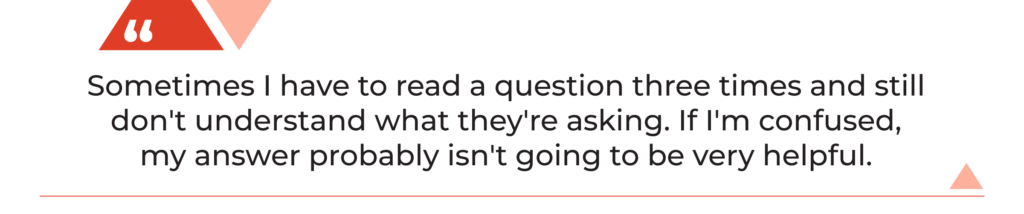
10. “Wait, What Are You Asking?” – Unclear Wording
Nothing makes respondents sigh louder than questions that require a decoder ring. Ambiguous language doesn’t just frustrate participants – it compromises your data when different people interpret the same question in wildly different ways.
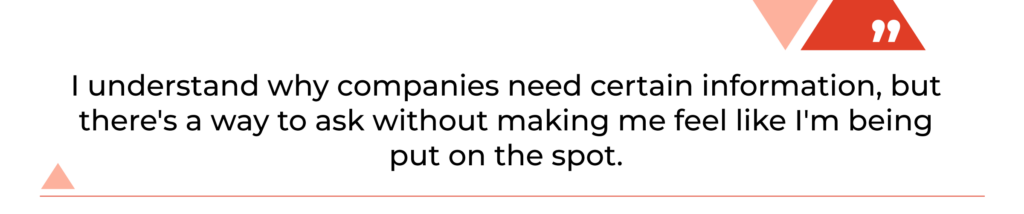
9. “This Feels Like an Interrogation” – Sensitive Topics Handled Poorly
There’s a delicate art to asking about personal matters. When questions about finances, health, or other sensitive topics come across as abrupt or insensitive, respondents may abandon your survey or provide inaccurate information just to move past the discomfort.
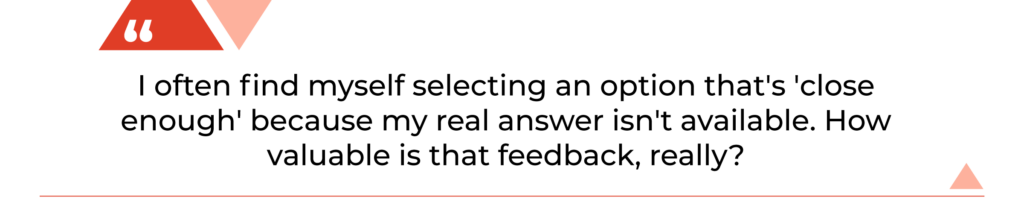
8. “None of These Apply to Me” – Limited Answer Options
When your multiple-choice options don’t include a respondent’s opinion, you force them to choose between inaccuracy and frustration. Either way, your data suffers.
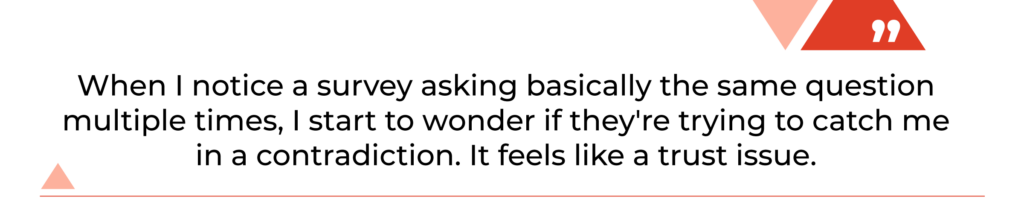
7. “Didn’t I Just Answer This?” – Repetitive Questions
We understand the value of validation questions, but there’s a fine line between thoroughness and redundancy. Ask the same thing too often (even if phrased differently), and your respondents will start giving automatic responses rather than thoughtful ones.
6. “Who Even Are You?” – Lack of Introduction or Context
Jumping straight into questions without explaining who you are, why you’re asking, and how the information will be used is like starting a conversation with a stranger by asking for their annual salary. A proper introduction builds trust.
5. “My Thumbs Are Too Big for This” – Poor Mobile Optimization
With more than half of all surveys now taken on mobile devices, optimization is non-negotiable. Tiny radio buttons, horizontal scroll bars, and matrix questions that render as microscopic grids will drive your mobile respondents to distraction, or directly to the exit button.
4. “I Know What Answer You Want” – Leading Questions
Questions that subtly (or not-so-subtly) nudge respondents toward a particular answer don’t just irritate participants – they actively undermine the integrity of your research.
3. “I Could Write a Book About That” – Too Many Open-Ended Questions
Open-ended questions have their place, but overusing them taxes respondents’ patience and energy. Most people aren’t prepared to write essays when they agree to take a survey.
2. “Is This Almost Over?” – Survey Marathon Syndrome
The relationship between survey length and completion rates isn’t complicated: as one goes up, the other goes down. Your 45-minute “quick survey” isn’t just annoying respondents – it’s actively degrading your data quality as fatigue sets in.
1. “The Grid of Doom” – The Massive Matrix Experience
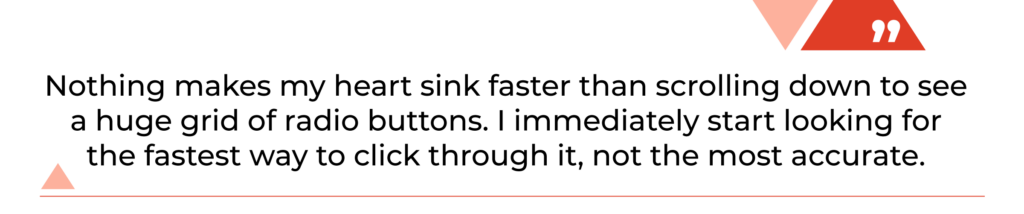
Taking the crown for most reviled survey element is the dreaded matrix question, especially those mammoth grids asking respondents to rate 20+ items across 7+ scales. They’re cognitive overload in digital form.
Recognizing these common pitfalls is the first step toward creating surveys that respect your respondents and yield better data. After all, the quality of your insights depends directly on the quality of the respondent experience you provide.
Remember, behind every data point is a human being giving you their time and attention. Design your surveys with their experience in mind, and you’ll be rewarded with more thoughtful, honest, and useful responses.
![20250615-qm-expert-project-management-advice-for-market-research-success | Quest Mindshare Expert Project Management Advice for Market Research Success [Checklist Included]](https://questmindshare.com/wp-content/uploads/2025/07/20250615-qm-expert-project-management-advice-for-market-research-success-300x156.png)